


AIEO for Content Publishers: KPI Blueprint for Visibility
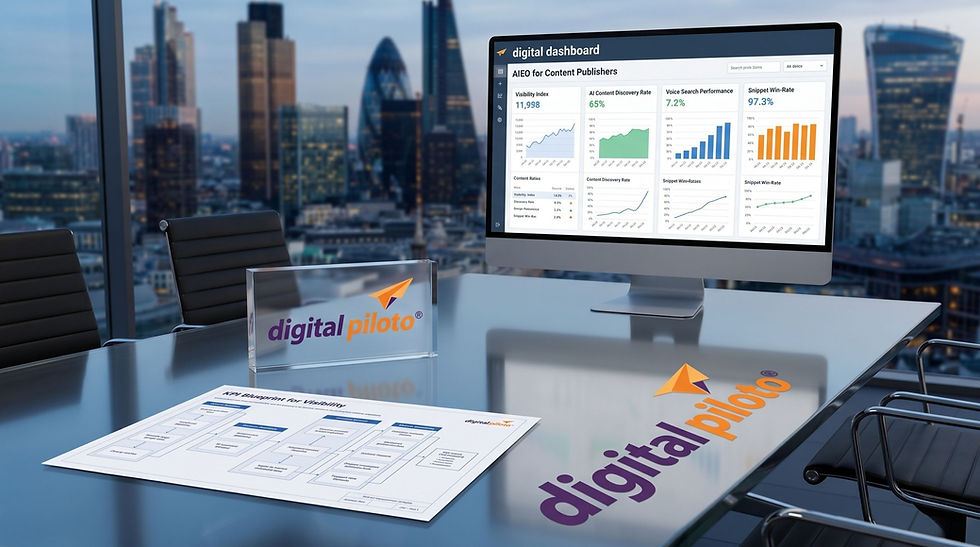
AIEO (Artificial Intelligence Engine/Experience Optimization) for publishers is a structured checklist that ensures your content is discoverable, understandable, and trusted by AI-driven search systems. It focuses on optimizing content for machine interpretation, user experience, and E-E-A-T signals, while tracking clear KPIs like visibility in AI answers, engagement depth, and content authority.
Today, publishers using digital marketing services in Kolkata are already shifting from traditional SEO to AIEO frameworks—because ranking alone is no longer the goal. Being selected by AI engines is.
What is AIEO for Publishers?
Definition
AIEO (Artificial Intelligence Engine/Experience Optimization) is the process of structuring, enhancing, and measuring content so that AI systems—like search assistants and generative engines—can easily interpret, trust, and recommend it to users.
Focuses on AI readability, not just human readability
Strengthens E-E-A-T signals for credibility
Optimizes content for AI-generated answers
Tracks performance beyond traditional rankings
In simple terms, AIEO ensures your content is “AI-ready” and consistently chosen in machine-generated responses.
Why Publishers Need an AIEO Checklist
The publishing landscape has changed. Users increasingly get answers directly from AI tools without visiting multiple websites. That means:
Traffic is influenced by AI citations, not just rankings
Content must be structured for extraction
Authority signals matter more than ever
Without AIEO, even high-quality content can remain invisible in AI-generated answers.
Core AIEO Checklist for Publishers
Content Structure Optimization
Use clear headings and subheadings
Answer specific questions directly
Keep paragraphs concise and scannable
E-E-A-T Signal Enhancement
Show author expertise and credentials
Add credible references and sources
Maintain consistent brand authority
Technical Readiness
Implement structured data (schema markup)
Ensure fast loading and mobile optimization
Maintain clean internal linking
AI Discoverability
Optimize for conversational queries
Use entity-based keywords
Align content with user intent precisely
Step-by-Step AIEO Implementation Workflow
Execution Framework
Audit Existing Content: Identify gaps in structure, clarity, and authority.
Define Content Intent: Map each page to a specific user query.
Optimize for AI Extraction: Add direct answers, lists, and structured formats.
Strengthen E-E-A-T Signals: Include author bios, credentials, and trust indicators.
Implement Schema Markup: Help AI systems interpret your content accurately.
Track KPIs: Monitor performance across AI and traditional channels.
This workflow transforms content from “search-optimized” to “AI-selected.”
Key Metrics & KPIs for AIEO
Visibility Metrics
AI Citation Rate: How often your content appears in AI-generated answers
Featured Snippet Presence: Frequency of appearing in answer boxes
Entity Recognition Score: Consistency of brand/entity mentions
Engagement Metrics
Scroll Depth: How far users engage with content
Time on Page: Indicates content relevance
Interaction Rate: Clicks, shares, and comments
Authority Metrics
Backlink Quality: Relevance and trust of linking domains
Author Credibility Signals: Verified expertise and consistency
Content Freshness Score: Regular updates and accuracy
Unlike traditional SEO, AIEO KPIs focus on trust and usability, not just traffic.
Role of Technology in AIEO
Technology enables scalable AIEO implementation. Many publishers rely on software development in Kolkata to build custom tools for content analysis, schema automation, and KPI tracking.
AI tools analyze content performance in real time
Automation ensures consistency across pages
Dashboards provide actionable insights
Without the right tech stack, maintaining AIEO at scale becomes inefficient.
Common Mistakes Publishers Make
Overwriting for Keywords: Ignoring natural language and clarity
Weak E-E-A-T Signals: Missing author credibility and trust factors
Poor Content Structure: Difficult for AI to extract answers
Ignoring AI Metrics: Focusing only on traditional SEO KPIs
Even publishers offering best SEO services in Kolkata are now realizing that SEO alone isn’t enough—
AIEO is the next layer.
Real-World Example: AIEO in Action
Consider a news publisher covering technology trends. Instead of long, unstructured articles, they break content into clear sections with direct answers, add schema markup, and highlight expert authors.
The result? Their content gets picked up in AI summaries, increasing visibility even without traditional clicks.
FAQs
1. What is AIEO in simple terms?
AIEO is the process of optimizing content so AI systems can understand, trust, and recommend it in search results and generated answers.
2. How is AIEO different from SEO?
SEO focuses on rankings, while AIEO focuses on AI discoverability, content extraction, and trust signals.
3. What are the most important AIEO metrics?
Key metrics include AI citation rate, engagement depth, and authority signals like backlinks and author credibility.
4. Can small publishers implement AIEO?
Yes, by starting with structured content, clear answers, and basic schema markup.
5. Why are E-E-A-T signals important in AIEO?
They help AI systems determine whether your content is trustworthy and worth recommending to users.
Conclusion
AIEO is not a trend—it’s a necessary evolution for publishers. The shift from ranking to recommendation is already happening. Those who optimize for AI engines today will control visibility tomorrow. The rest will struggle to stay relevant.
Blog Development Credits:
This piece was ideated by Amlan Maiti, developed using advanced AI research tools, and refined with strategic SEO insights by Digital Piloto Private Limited.


Comments